At a glance
Use gaffer tape for temporary production tasks such as cable dressing, labels, and marks. Choose a purpose-rated tape for electrical insulation, floor seams, weather sealing, or permanent repairs.
- Choose for the surface and removal plan, not the name on the roll.
- Matte finish and clean release are separate properties. Test both.
- Gaffer tape is a consumable for temporary setups, not structural support.
Start with the last five minutes of the job
Imagine the room after the audience leaves. You need to lift the tape, coil the cables, return the rental equipment, and hand the floor back in the condition you found it. That ending is the strongest reason to choose gaffer tape for a temporary setup. A bond that is difficult to remove can be useful in a repair and a problem at strike.
Write down three things before choosing: the surface, the expected time in place, and who owns the surface. A strip on your own flight case presents a different decision from a strip on a rented piano, freshly painted scenery, or a venue's polished floor. Permission and a small test are cheaper than a confident guess.
Do not treat clean removal as a promise about every material. Finish condition, temperature, pressure, dirt, and time can all change the result. Your test needs to resemble the actual job, including the waiting time.
A short comparison you can actually use
Tape categories describe common design goals, not identical products. Two duct tapes can have different backings and adhesives; two gaffer tapes can release differently on the same painted board. Read the particular product's instructions when the task depends on a rating.
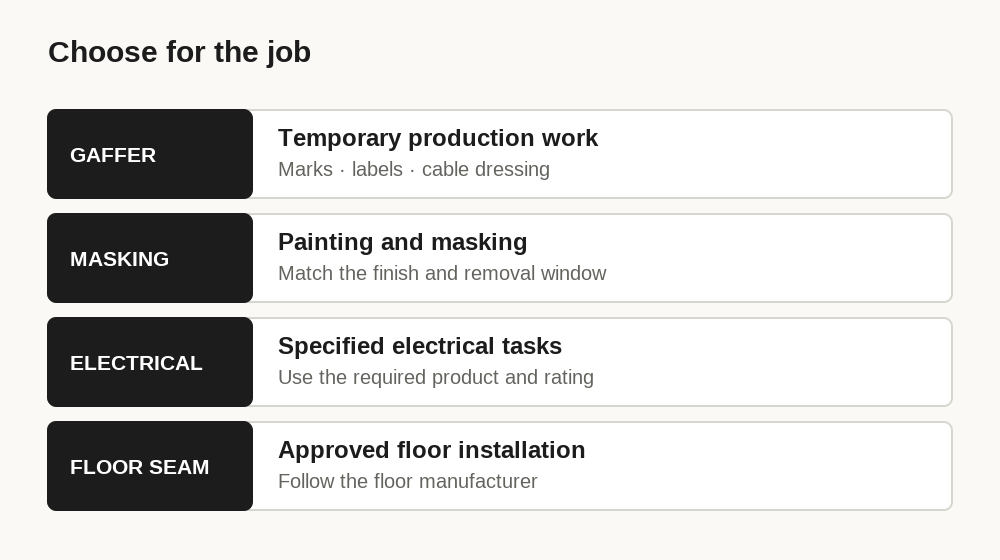
For everyday production work, the table below narrows the first choice. It does not turn any tape into an approved substitute for a cable protector, fastener, or electrical repair. If the task involves a specified product, start with that specification rather than the nearest roll in the kit.
| Task | First option to consider | What to check |
|---|---|---|
| Temporary cable dressing | Gaffer tape | Surface test and enough floor contact |
| Mixer labels | Board/console tape | Writable surface and finish compatibility |
| Paint masking | Painter’s masking tape | Finish, cure time, and removal window |
| Electrical insulation | Appropriately rated electrical tape | Equipment instructions and required rating |
| Vinyl dance-floor seams | Floor-maker-approved seam tape | Floor material and installation instructions |
| Long-lasting repair | Task-specific repair tape | Weather, temperature, and substrate ratings |
Check glare separately from adhesion
Matte gaffer tape is useful when a glossy patch would catch a lighting cue or appear in the camera frame. But matte does not mean invisible. A white strip on a black deck can remain obvious under dim light; black tape on a pale wall can be more noticeable than the cable it covers.
Test the tape from the actual viewing position. For a camera, look at the monitor using the intended framing and exposure. For a stage, ask someone to view the patch from the audience and from a performer's approach. If the strip must serve as a mark, concealment might be the wrong goal.
Keep label readability in the same test. A label that blends beautifully into a rack is not useful when the operator needs to read it during a changeover.
When duct tape is the wrong shortcut
The common shortcut is to use duct tape because the roll is already in the truck. That may make sense for a task matched to that product. It is a weak reason for sticking it to venue flooring or a rented cable jacket when you expect to remove it shortly afterward.
Think about total work rather than the price of one roll. A cheaper strip that takes several minutes to clean from each cable can cost more time than you saved. Residue also collects dust, makes a cable unpleasant to handle, and can hide old labels.
The reverse mistake is assuming gaffer tape is superior for every job. A temporary clean-release adhesive is not necessarily the right choice for a weather-exposed repair or a permanent bond. Select the required performance, not a favorite category.

Run a useful small-area test
Choose an inconspicuous spot on the same material and finish as the real application. Check with the owner before testing anything delicate. Use a short strip from the actual roll, apply it with the pressure you expect to use, and record when it went down.
Leave it for a representative period when the schedule permits. A one-minute test does not tell you what an overnight application will do. Peel slowly while supporting the surface, and inspect both the surface and the adhesive side for lifted paint, fibers, or finish.
If a test fails, change the method rather than simply using less tape and hoping. A free-standing label, reusable strap, cable cover, or different route may solve the problem without an adhesive bond.
Build a small kit around real tasks
A useful starter kit can be simple: a roll of black gaffer tape for discreet temporary dressing, white writable tape for labels and contrast, a marker, reusable cable straps, and whatever specialty tape your venue or equipment requires. Keep specialty products identified so they do not become anonymous black rolls.
Label the inside of the core with the product and purchase date if it is not already clear. Store the roll cleanly and avoid leaving it in a hot vehicle. Before a job, check for damaged edges, contamination, or a roll that has become difficult to unwind.
Finally, give each job an owner. The person who tapes the cable should know when it comes up. A removal plan is part of selecting the tape, not a favor for the crew that works after you.
Common questions
Can I use gaffer tape instead of electrical tape?
Not for electrical insulation or repairing a damaged power cable. Use the specified electrical product and have damaged equipment assessed appropriately. Gaffer tape can identify an intact cable; it does not repair its insulation.
Is all black cloth tape gaffer tape?
No. Color and a cloth-looking backing do not establish adhesive type, finish, clean release, or ratings. Check the actual product description and test the intended surface.
Sources & further reading
- Pro Tapes: gaffer tape construction and applications ↗
General gaffer-tape guidance; specifications on that page apply to Pro Gaff, not TufGaff.
- Rosco: vinyl dance-floor seam tape ↗
Rosco distinguishes vinyl floor seam tape from other production tapes.
- TufGaff: roll sizes and product listing ↗
Check the listing for the selected size, color, price, and availability.
Stock the kit.
2-inch matte cloth tape. Black in 30 or 55 yards; white in 55 yards.