
At a glance
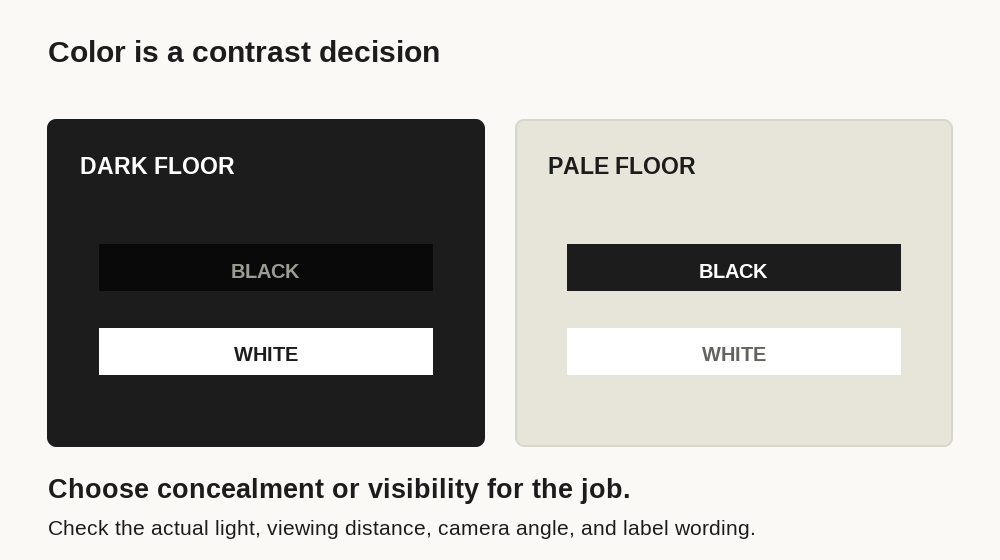
Use the color that gives the intended result on the actual surface and under the actual lighting. Black is often discreet on a dark deck; white often supports readable dark-marker labels. Neither is automatically invisible or highly visible everywhere.
- Evaluate marks from the performer’s or operator’s approach, not only while kneeling beside them.
- Use shape and text as well as color when labels carry important meaning.
- A matte surface can still show a strong contrast or become visible in a camera angle.
Ask who needs to see the tape
Start with a simple question: is the strip meant to be noticed? A stage manager marking a furniture position wants a shift crew to find it. A camera operator dressing a cable just outside frame wants the audience to ignore it. One color cannot optimize both tasks by itself.
Write the intended reader and viewing position in the setup note. For example, "visible to the lectern operator from behind the podium" is a much clearer goal than "use white." It helps the next person judge whether the mark actually works.
When the tape needs to disappear, check it against the surface and surrounding objects. When it needs to communicate, check it from the distance and direction of the person who must read it. Those two tests often lead to different choices within the same room.
Black tape on a dark deck
Black gaffer tape is commonly chosen for discreet temporary cable dressing on dark stages and sets. The matte finish can help limit reflections compared with a shiny strip, but color and sheen remain separate issues.
A black strip can still appear on a dark floor when the texture differs, the light skims across it, or the edge catches a highlight. Test the actual patch during the lighting cue. On camera, check the recorded or monitored image rather than relying on how your eye sees the room.
Do not let the desire to hide the cable remove a necessary visibility cue or protection method. A cable route must be appropriate for its location and users. Choosing black tape does not decide whether a crossing needs a different route or a proper protector.
White tape for readable labels
White writable tape often makes a practical background for short dark-marker labels on cases, patch points, and approved console surfaces. The contrast can make a label readable without unusually large lettering, though you should still write for the viewing distance.
Test the marker on a spare piece and let it dry. Some marker and tape combinations smear, especially when a hand or another strip rubs the surface. Label the strip before applying it if that helps keep ink off the equipment.
A white label can be too conspicuous in a camera shot or reflected in a shiny surface. Move it to an approved position outside the frame, use a different identification method, or test a less visible label. Keeping a label useful to the crew does not require putting it on the most prominent face of the equipment.
Test floor marks with the lighting they will have
Place short sample marks where the crew has permission to test. Look at them under worklights, then under the relevant rehearsal or show cue. Ask someone to approach from the normal direction and find the mark without being told precisely where it is.
A mark may need to be visible from one side of a piece of scenery but not from the audience. Its position can matter more than its color. A short side reference or agreed label may work better than increasing the size of a central mark.
Use a shape and a written identifier when more than one location is involved. An L marked D1-A and an L marked D1-B remain distinguishable even when the colors look similar. Keep the same identifiers on the ground plan and shift notes.
| Job | Color to test first | Additional check |
|---|---|---|
| Discreet dressing on a dark deck | Black | Skimming light and camera angle |
| Dark-marker equipment label | White | Ink drying and normal reading distance |
| A position on pale flooring | Black | Floor approval and actual cue |
| An audience-visible object | Either, in a hidden approved position | All camera and audience sightlines |
Look through every camera that matters
For a filmed event, check the close shot, wide shot, and any alternate angle that can reveal the mark. A strip hidden behind the lectern in one shot may be obvious from a side camera. A floor mark outside the live frame may enter during a planned move.
Reflections deserve their own check. A white label can appear in a glossy table or product surface even when it sits outside the main frame. Move a test label while watching the monitor to identify the source rather than adding more tape in the visible area.
Keep a reference image after the check. If a setup is rebuilt the next day, that image helps distinguish a newly visible label from an exposure or framing change. Re-check after lighting or camera positions change.
Avoid a color code that needs an explanation every time
For a simple setup, use consistent jobs: white for readable temporary labels and black for discreet dressing, where the surface and viewing conditions support that choice. Document any exceptions rather than building an elaborate hidden code.
For more complicated systems, combine color with numbers and words. A spare microphone cable labeled SPARE A is easier to identify than a cable with only a strip of white tape. A patch label saying A/4 tells the next crew something specific about its destination.
Do not assume everyone sees colors or low-contrast marks in the same way. Ask the actual users to test the system and provide another cue. The goal is an arrangement the crew can use reliably, not one that looks coordinated in the kit photograph.
Plan both colors as separate supplies
Estimate black and white tape independently when the jobs require them. A large reserve of white labeling tape may not help a crew that has run out of black tape for an approved, camera-visible route. Keep the reserves tied to the actual tasks.
TufGaff's catalog includes black 30-yard and 55-yard options and a white 55-yard option. Check the listing for current availability and confirm the selected variant before ordering. Product photography and an old shopping-cart selection are not substitutes for checking the size and color.
At the end of the event, record which color was used for which job. Save useful partial rolls with their product identification intact. That gives the next purchase a reason beyond choosing the same colors as last time.
Common questions
Is black gaffer tape invisible under stage lights?
No. It can be discreet on a dark surface, but edges, texture, lighting direction, and camera exposure can reveal it. Test the actual strip under the intended conditions.
Can I write on black gaffer tape?
You can test a compatible light-colored marker on a spare piece. Confirm that it dries and remains readable. White board or labeling tape may be simpler when clear dark lettering is the priority.
Sources & further reading
- TufGaff: roll sizes and product listing ↗
Check the listing for the selected size, color, price, and availability.
- Pro Tapes: gaffer tape construction and applications ↗
General gaffer-tape guidance; specifications on that page apply to Pro Gaff, not TufGaff.
Stock the kit.
2-inch matte cloth tape. Black in 30 or 55 yards; white in 55 yards.