At a glance
Duct tape is a cloth-reinforced polyethylene tape with a high-tack adhesive, built for rough holding and outdoor work. Cloth tape is a broader category; it may mean a matte gaffer tape, a medical cloth tape, or a coated cloth tape. Choose by the coating, adhesive, and removal plan, not by the word cloth.
- Duct tape is a type of cloth tape, but most cloth tape is not duct tape.
- The polyethylene coating gives duct tape its toughness and water resistance.
- For temporary work on finished surfaces, a matte cloth tape is usually the safer starting point.
The names overlap, and that is the first problem
Cloth tape describes a backing. Duct tape describes a product family that happens to use a cloth backing. Gaffer tape also uses a cloth backing. So a label that says cloth tape could point to several different products.
Ask what the tape is for. If the job is holding a tarp, bundling rough materials, or a quick outdoor repair, duct tape is in the conversation. If the job is marking a stage, dressing a cable, or labeling a case, a matte gaffer tape is usually the better fit. If the job is medical, use a medical product, not a hardware-store cloth tape.
The words on the package are not a specification. Look for the backing, the coating, the adhesive, and any rating.
Construction: scrim, coating, adhesive
Duct tape starts with a woven cloth scrim. A polyethylene film is bonded to the scrim, and a pressure-sensitive adhesive is applied to the back. The film gives the tape a smooth, water-resistant surface and makes it difficult to tear by hand. The scrim gives it strength. The adhesive is usually rubber-based and high tack.
A typical gaffer tape also starts with cloth, often cotton or a synthetic blend. Instead of a glossy polyethylene coating, it gets a matte film and a lower-tack adhesive. The result is a tape that tears across the roll, sits flat, and reflects less light.
Generic cloth tape can be almost anything. It may be a cotton tape with a rubber adhesive, a coated cloth tape for bookbinding, a medical cloth tape, or a cheap gaffer-style tape with a shiny finish. The construction decides the behavior, not the category name.
| Layer | Duct tape | Gaffer-style cloth tape |
|---|---|---|
| Backing | Woven cloth scrim | Woven cloth |
| Coating | Polyethylene film | Matte film |
| Adhesive | High-tack rubber | Rubber or acrylic, lower tack |
| Tear | Usually needs scissors | Hand tearable |
| Finish | Glossy to satin | Matte |
| Removal | Aggressive and residue-prone | Designed for cleaner release |
Strength is not the same as suitability
Duct tape is strong in tension and has a tough surface. That makes it useful for bundling, patching, and holding things that need a rough-and-ready bond. It is not a structural fastener, and it is not a substitute for a clamp, a rated strap, or a proper repair.
Cloth tape can also be strong, but strength is not the reason to choose it for a set. The reason is control: it tears to length, conforms to a surface, and comes off with less drama. A tape that is too strong for the job can damage the surface it is supposed to protect.
The practical question is not which tape is stronger. It is which tape solves the job without creating a removal problem. A duct tape repair that holds for a week but takes the paint with it is not a success on a rented wall.
Tensile strength is also not the whole story. A duct tape can be strong in tension and still fail in peel if the surface is dusty or the edge lifts. A cloth tape can be weaker in tension and hold a cable better because it conforms to the floor and stays in contact. Match the failure mode to the job, not just the pull strength on the label.
Water, heat, and sunlight
Duct tape has a reputation for weather resistance because of the polyethylene film. It can handle a temporary outdoor patch, but the reputation is often overstated. Sun, heat, and water can degrade the adhesive and the backing. A duct tape patch is a temporary measure, not a permanent weather seal.
Most gaffer tapes are intended for indoor, temporary use. They are not the tape to choose for a roof leak, a boat, or a surface that will sit in the rain. If the job is outdoors, start with a product rated for outdoor use and follow its instructions.
Temperature matters on both sides. A hot surface can soften any pressure-sensitive adhesive. A cold surface can make the tape hard to apply. If the job is outside the normal range, the data sheet is more useful than the name on the roll.

Match the tape to the time in place
Ask how long the tape will stay. Duct tape is often chosen for jobs measured in weeks or months: a temporary patch on a shed, a bundle of conduit, a label on a rough crate. Gaffer tape is chosen for jobs measured in hours or days: a cable path for a shoot, a mark for a rehearsal, a label for a changeover. The time scale is a better guide than the strength of the tape.
A permanent bond on a temporary job is a common mistake. It holds, then it fails at removal. A temporary bond on a permanent job is the opposite mistake: it lifts early and the repair fails. Decide which one you are doing before you choose the roll.
Common substitutions that cause problems
Most tape mistakes are not dramatic. They are small substitutions made when the right roll is not within reach. A few examples are worth keeping in mind.
The pattern is the same each time: the wrong tape is asked to do a job it was not designed for. The fix is not a stronger roll. It is the right category, applied with a removal plan.
- Duct tape on a painted wall. The tape may hold the cable, then lift the paint at removal. Use a gaffer tape for the temporary run, or a clip that does not rely on adhesive.
- Duct tape on a package. The bond is stronger than the box needs, and the adhesive can transfer to the contents. Use packing tape for a carton.
- Gaffer tape on a rough outdoor repair. The tape may soften in the sun or lift in the rain. Use a product rated for the conditions.
- Cloth tape on a hot surface. The adhesive can soften and slide. Use a heat-rated tape approved by the equipment maker.
Residue and the removal plan
Duct tape is designed to hold. That is a virtue until removal day. The high-tack adhesive can transfer to a surface, lift paint, or leave a sticky line that collects dust. The longer it stays, the more likely that becomes.
Gaffer tape is designed to release more cleanly, but it is not magic. A cheap gaffer-style tape, a hot surface, or a long dwell time can still leave residue. The difference is in the probability, not a guarantee.
If the surface is finished, rented, or expensive, test both candidates. Put a short strip of each on an inconspicuous area, leave them for the same time, and compare the removal. The result on your surface is worth more than a general recommendation.
Cost, color, and the aisle test
Duct tape is usually cheaper per roll and available in more places. Gaffer tape costs more because the backing, coating, and adhesive are chosen for temporary production work. The price difference is real, but so is the cleanup difference.
Color is a poor guide. Black duct tape and black gaffer tape can look similar on the shelf. Turn the roll over and look at the backing. If it is glossy and hard to tear, it is probably duct tape. If it is matte and tears across the width, it is closer to gaffer.
Buy the smallest roll that covers the job if you are trying a new product. A large roll of the wrong tape is not a bargain. Label the core with the product name and date so you know what you are reaching for next time.
A simple way to choose
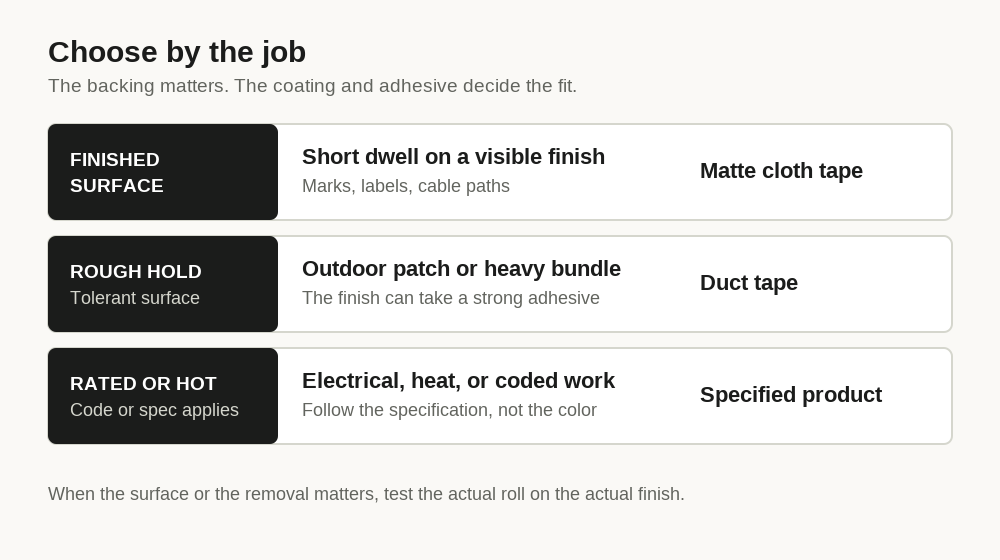
Use duct tape for rough holding, bundling, and temporary outdoor patches where the surface can tolerate a strong adhesive. Use a matte gaffer tape for temporary cable paths, marks, and labels on finished surfaces. Use a specialty tape when the job has a rating, a code, or a manufacturer's instruction.
If you are still unsure, choose the tape that is easier to remove. On a production, the removal is part of the job. A tape that saves five minutes during setup and costs thirty minutes at strike is the more expensive choice.
Common questions
Is cloth tape the same as duct tape?
No. Duct tape is a specific type of cloth-reinforced tape with a polyethylene coating. Cloth tape is a broader term that can include gaffer tape, medical tape, and other products.
Is duct tape waterproof?
It is water-resistant for a while, not a permanent waterproof seal. Water can get under the edges, and sun and heat can break down the adhesive.
Which leaves less residue, cloth tape or duct tape?
A quality gaffer-style cloth tape usually leaves less residue than duct tape on finished surfaces, but the surface and dwell time still decide. Test before committing.
Can I use duct tape for a cable path?
It will usually hold, but the removal is the problem. On a finished floor or a cable jacket, the adhesive can leave residue or lift a coating. Use a gaffer tape or a cable cover, and test the surface first.
What is gaffer tape made of?
A cloth backing, usually with a matte film coating and a pressure-sensitive rubber or acrylic adhesive. The exact construction varies by product.
Sources & further reading
- Pro Tapes: gaffer tape construction and applications ↗
General guidance on gaffer tape; specifications on that page apply to Pro Gaff, not TufGaff.
- Duck Brand: duct tape use and selection ↗
Brand guidance on duct tape; product-specific ratings vary by SKU.
- TufGaff: roll sizes and product listing ↗
Check the listing for the selected size, color, price, and availability.
Stock the kit.
2-inch matte cloth tape. Black in 30 or 55 yards; white in 55 yards.